

Military Uniform Procurement Guide for B2B Buyers
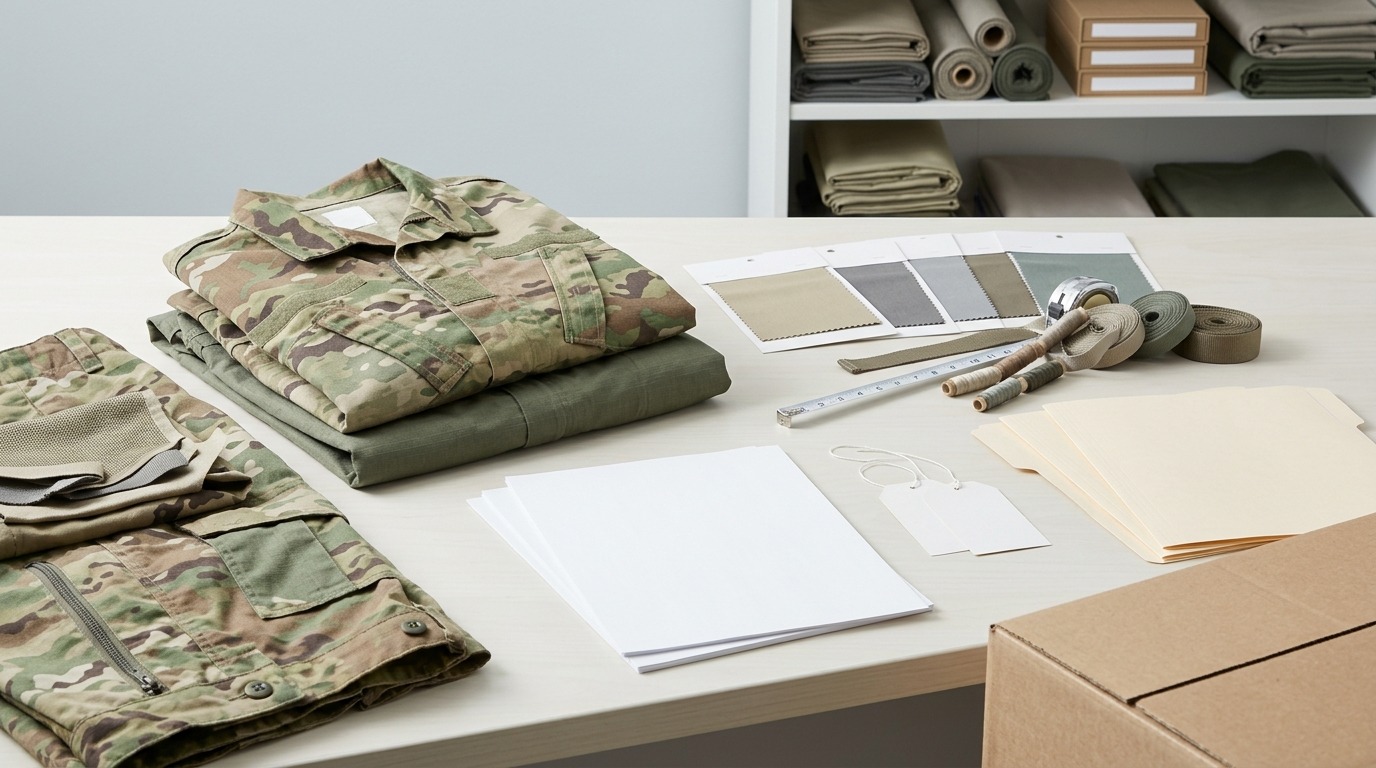
Procurement Guide
Military Uniform Procurement Guide: RFQ Planning
Direct answer: A military uniform procurement guide should help B2B buyers issue comparable RFQs. Define the item list, quantity and size split, buyer-controlled specifications, artwork, sample approvals, inspection evidence, packing, destination, commercial terms, and delivery window before requesting quotations.
Armed forces requirements differ by buyer and country. This procurement guide is not an official specification source. Buyers must provide the controlling project or tender documents, drawings, samples, test methods, acceptance criteria, and lawful artwork rights. B2B buyers should confirm all project-specific requirements before sourcing.
Use this guide for buyer-side RFQ and specification planning. Use Military Uniform Supply Company for broad supplier capability, Custom Services for design-to-sample work, the Contracts Guide for tender process, and Contact to submit a quotation request.
WHCSJ is a Wuhan, China-based B2B supplier for military uniforms, tactical apparel, footwear, field gear, customization projects, and one-stop procurement support. The company works through its own production facilities and long-term partner manufacturers and has served customers in more than 80 countries.
RFQ Preparation
Procurement Requirements Checklist
Procurement requirements checklist: use this military uniform buying guide checklist before sending an RFQ. Clear inputs help the supplier confirm feasibility, sample steps, pricing assumptions, packaging, and production timing.
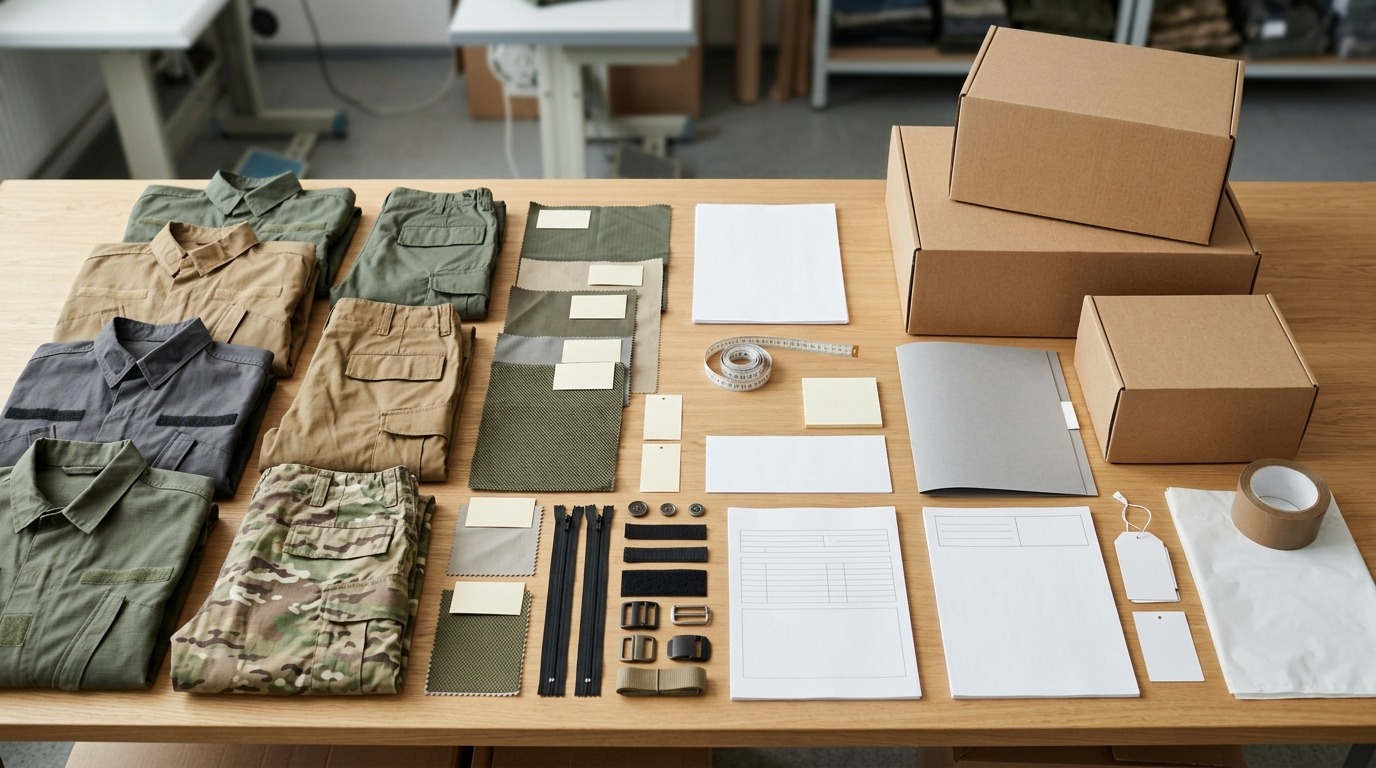
Specification Pack
Garment Specification Pack And Tech Pack Fields
Direct answer: a garment specification pack or tech pack should give every shortlisted manufacturer the same revision-controlled product definition. Include drawings, a bill of materials, construction and measurement rules, artwork, labels, approval stages, inspection inputs, packing, and delivery requirements. A generic military label or product name is not a substitute for buyer-issued specifications.
| Spec-Pack Section | Buyer Input | Approval Evidence |
|---|---|---|
| Document control | Item name, style code, issue date, revision number, owner, reference files, and change log. | One current revision accepted by buyer and supplier. |
| Technical flats | Front and back drawings, pocket map, closures, reinforcements, seam callouts, and component positions. | Annotated drawing review before sample work. |
| Bill of materials | Fabric, lining, thread, buttons, zippers, hook-and-loop, labels, packaging, target properties, and allowed substitutions. | Approved swatches, components, or buyer-accepted equivalents. |
| Measurements and construction | Point-of-measure diagram, size chart, grading, tolerances, seam type, stitch details, and workmanship criteria. | Buyer-reviewed fit or size-set sample and measurement report. |
| Artwork, labels, and packing | Lawful artwork files, placement, label copy, language, folding, bagging, assortment, carton marks, and destination documents. | Signed artwork, label, and packing mock-up approval. |
| Samples and inspection | Prototype and pre-production stages, review owner, defect categories, inspection timing, test methods, thresholds, and release rule. | Approved sample plus reports required by the controlling project. |
Materials And Components
WHCSJ Direct Answer: Military Uniform Materials And Components
Direct answer: for military uniform components and military uniform fabric, buyers should specify the fabric blend, weight or hand-feel target if known, shade tolerance, pocket/component list, closures, trims, labels, size grading, sample approval rules, packaging, and destination conditions before asking suppliers to quote. For army uniform material or what are army uniforms made of questions, use the buyer’s required specification instead of assuming one official material for every project.
Uniforms may use cotton, polyester-cotton, nylon-cotton, ripstop-style woven fabric, or other buyer-specified materials depending on climate, use case, durability target, comfort needs, order budget, and available sample evidence. Do not assume official issue, Mil-Spec approval, flame resistance, certification, or compliance status unless the buyer provides exact requirements and product-specific evidence.
Material And Component RFQ Table: use these fields to keep material discussions practical and quotation-ready.
| RFQ Field | What To Specify | Buyer Note |
|---|---|---|
| fabric blend | Fiber mix, fabric weight target, weave preference, hand-feel target, and reference sample if available. | A sample or swatch is more reliable than a vague fabric name. |
| shade tolerance | Solid color, camouflage reference, acceptable shade range, and whether lab dip or strike-off approval is needed. | Color approval should happen before bulk material cutting. |
| pocket/component list | Pocket count, pocket position, flap type, reinforcement areas, waist adjusters, knee patches, cuffs, and epaulets. | Component maps reduce sample revisions and quotation gaps. |
| trims | Buttons, zippers, hook-and-loop, drawcords, elastic, thread color, and reinforcement tape. | Trim quality and color should match the approved sample. |
| labels | Brand label, size label, care label, barcode label, carton label, and buyer-supplied label artwork. | Confirm label language and artwork before production. |
| size grading | Measurement chart, size ratio, tolerance, long/regular/short lengths, and user group notes. | Size rules affect fabric consumption and packing plans. |
| sample approval | Counter-sample quantity, review owner, approval deadline, revision rules, and bulk-production trigger. | No bulk production should start from unclear sample feedback. |
| packaging | Polybag rules, set packing, size assortment, carton marks, pallet needs, and destination documents. | Packing details affect logistics, inspection, and warehouse receiving. |
Supplier Selection
Supplier Evaluation Table
Supplier evaluation table: compare each supplier on practical procurement signals before committing to sample work or bulk production.
| Evaluation Area | What Buyers Should Check | Why It Matters |
|---|---|---|
| Production scope | Combat uniforms, service uniforms, tactical apparel, caps, cold-weather clothing, footwear, bags, and field gear. | A broader supply scope can reduce coordination work for bulk uniform procurement projects. |
| Customization | Fabric, color, camouflage reference, logo, labels, size rules, packaging, and carton marks. | Specific customization answers reduce sample revisions and quotation gaps. |
| Sample process | Reference review, counter-sample planning, approval steps, and bulk production trigger. | Samples help confirm fit, fabric, construction, and branding before volume production. |
| Quality checks | Material, color, stitching, measurement, quantity, packaging, and final carton review. | Inspection points make delivery expectations clearer for procurement teams. |
| Tender support | Specification review, sample planning, order schedule, packing requirements, and document coordination. | Tender-driven buyers need practical communication before quotation and delivery commitments. |
Supplier Shortlisting
Supplier Shortlisting: Manufacturers, Suppliers, And Procurement Fit
Best Military Uniform Supplier Is A Fit Decision: the best military uniform supplier for a B2B program is the supplier that can match the buyer’s uniform type, fabric target, quantity, customization, sample approval process, packaging rules, delivery schedule, and repeat-order plan. Procurement teams comparing military uniform suppliers, military clothing suppliers, army uniform supplier options, or army uniforms manufacturer results should separate buyer-fit signals from generic company lists.
Manufacturer Or Supplier Comparison: when buyers ask who makes military uniforms or who makes army uniforms, the useful comparison is not only factory ownership. Check whether the supplier can coordinate manufacturing scope, partner production where needed, samples, QC checkpoints, carton labeling, delivery documents, and tender communication without overstating approvals or certifications.
Specification Planning
Uniform Types To Define Before Sourcing
- Combat uniforms: ACU, BDU, camouflage uniforms, field shirts, field pants, and training uniforms.
- Service uniforms: formal uniforms, officer uniforms, caps, hats, shirts, and trousers.
- Tactical apparel: tactical shirts, tactical pants, jackets, rainwear, gloves, and cold-weather layers.
- Related procurement: footwear, bags, pouches, ponchos, and selected field gear when the project needs one-stop coordination; availability depends on buyer specifications and product-specific documentation.
Process
Sample-to-Bulk Workflow
Sample-to-bulk workflow: keep every step tied to buyer-approved specifications.
- Requirement review: buyer sends specifications, samples, photos, quantity, and delivery needs.
- Material confirmation: supplier checks fabric, color, trim, logo, packaging, and production feasibility.
- Counter-sample: sample work confirms construction, measurements, and buyer-requested details.
- Bulk production: approved samples move into material preparation, cutting, sewing, inspection, and packing.
- Delivery coordination: carton marks, packing list, shipment timing, and project follow-up are confirmed.

Buyer Risk Control
Common Procurement Mistakes
Common procurement mistakes: these issues can delay sampling, quotation, and delivery.
- Comparing suppliers only by unit price before confirming fabric, construction, logo, size breakdown, and packing rules.
- Sending a vague RFQ without reference photos, sample garments, drawings, or a clear product list.
- Confirming packaging, carton marks, delivery country, and inspection requirements too late.
- Assuming one uniform specification fits every unit, climate, user group, or size range.
- Requesting unsupported certification or performance claims without product-specific evidence.
WHCSJ Support
How WHCSJ Supports Military Uniform Procurement
WHCSJ supports military procurement departments, contractors, bidders, agencies, security companies, and distributors with custom military uniforms, tactical apparel, footwear, field gear, packaging coordination, tender-driven communication, and one-stop procurement support.
For supplier capability details, visit the military uniform supply company page. For style, fabric, color, logo, size, and packaging customization, visit custom military uniforms. For bid planning details, review the military uniform contracts guide. To start an RFQ, send product details through WHCSJ contact.
FAQ
Military Uniform Procurement Questions
What should buyers prepare before requesting a military uniform quote?
Buyers should prepare the uniform type, quantity, fabric target, color or camouflage reference, logo and label details, size breakdown, packaging rules, delivery country, deadline, sample needs, and tender files if available.
What material details should buyers include in a military uniform RFQ?
Buyers should include the target fabric blend, weight or hand-feel reference, shade tolerance, camouflage or solid-color reference, pocket/component list, trims, labels, size grading, sample approval rules, packaging, and destination conditions.
What are army uniforms made of for procurement planning?
Army uniform material depends on the buyer’s specification, climate, use case, comfort target, durability target, and budget. Common procurement discussions may reference cotton, polyester-cotton, nylon-cotton, ripstop-style woven fabric, or other buyer-specified materials, but the RFQ should not assume one official material for every project.
How should buyers specify military uniform components?
Buyers should list each military uniform component clearly: pocket positions, closures, buttons, zippers, hook-and-loop areas, reinforcement points, waist adjusters, cuffs, labels, patches, carton labels, and packing rules. Reference samples or drawings help suppliers quote accurately.
How should a procurement team compare military uniform suppliers?
Send the same dated RFQ and specification pack to each shortlisted supplier. Compare the returned evidence for scope, customization, sample approval, inspection, packing, delivery, tender support, and communication ownership. Record unanswered items before requesting a final quotation. An established company name or general capability statement does not by itself show fit for a specific uniform program.
Why are samples important before bulk uniform production?
Samples help confirm fabric, construction, measurements, color, logo placement, labels, and packaging details before bulk production begins.
Can one supplier coordinate uniforms and related field gear?
Yes, when the supplier has suitable production and sourcing support. WHCSJ can coordinate uniforms with tactical apparel, footwear, bags, rainwear, pouches, and selected field gear depending on project requirements.
What affects MOQ and lead time for military uniforms?
MOQ and lead time depend on style, fabric, color or camouflage, logo method, size breakdown, sample requirements, packaging, order quantity, and delivery timeline.
Does WHCSJ support tender-driven military uniform orders?
WHCSJ can review tender specifications, clarify feasible customization details, plan samples, coordinate production, and discuss packaging and delivery requirements for tender-driven procurement projects.
Request a Quote
Prepare Your Military Uniform RFQ
Send WHCSJ your product list, quantity, sample photos, fabric or color requirements, size breakdown, logo details, packaging rules, delivery country, and tender files. The team can review feasibility and help confirm a practical procurement path.
View Supplier Capability | Review Custom Uniform Services | Request a Quote